
Five Invasive Aquatic Plants Costing South African Businesses Thousands
A dam can look fine one season and be choked with vegetation the next. For farms, mines, estates, golf courses, and irrigation users in South Africa, invasive aquatic plants are more than an inconvenience. They can block intakes, reduce storage capacity, slow water flow, and drive up maintenance costs.
South Africa’s freshwater systems face constant pressure from nutrient runoff, warm temperatures, and still water, which create ideal conditions for fast-growing aquatic weeds. Several of the most troublesome species are regulated under South Africa’s invasive species laws, and landowners are expected to manage them responsibly. The good news is that early action makes control far easier and more affordable.
If your site is struggling with invasive aquatic plants, visit www.dartgroup.co.za to learn how Dart handles dam cleaning and aquatic weed control mechanically.
Common Reed (Phragmites australis)
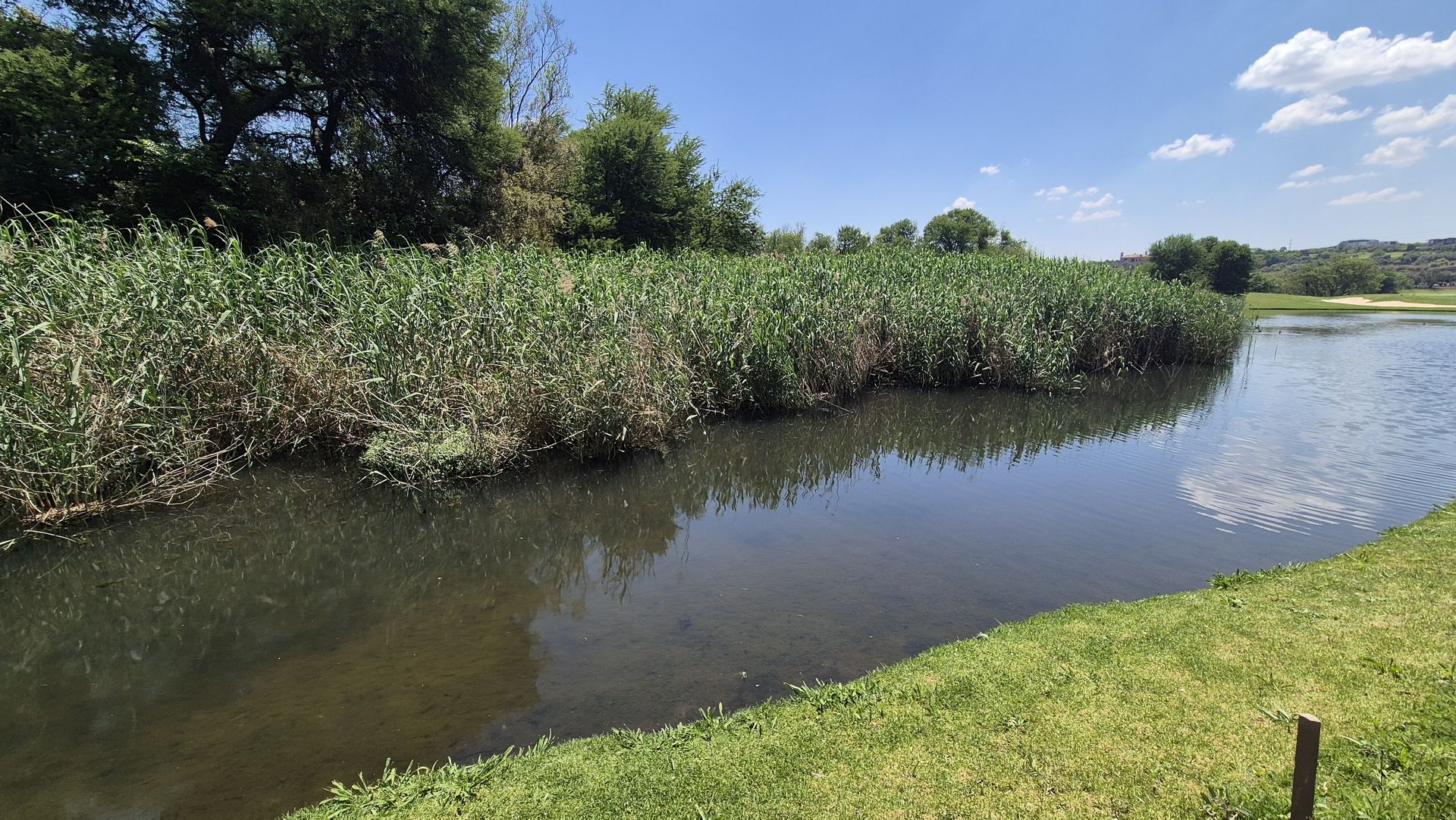
Common reed is a tall wetland grass that can spread aggressively along dam edges, canals, and wetlands. It is native to South Africa, but that does not make it harmless. In the wrong conditions, it forms dense stands that crowd out open water and make maintenance more difficult.
Its main impact is physical. Dense reed beds can reduce usable dam capacity, obstruct inflows and outlets, trap sediment, and make it harder for pumps and equipment to operate efficiently. On farms, they can also limit safe livestock access to water. In managed landscapes, they create a constant cutting and clearing burden.
A useful local example comes from the Wilderness Lakes system in the Western Cape, where reed encroachment has been managed for decades after natural disturbance patterns changed. Research showed that cutting reeds in permanently flooded zones could eliminate them, while cutting in moist or dry zones often led to shorter regrowth. That is an important lesson for businesses managing wetland edges and dam margins. The right intervention depends on site conditions.
Reeds also play a useful ecological role. They stabilise banks, filter nutrients, and help with water treatment in constructed wetlands. The problem is not the plant itself, but unmanaged expansion in places where open water needs to be maintained.
Water Hyacinth (Eichhornia crassipes)
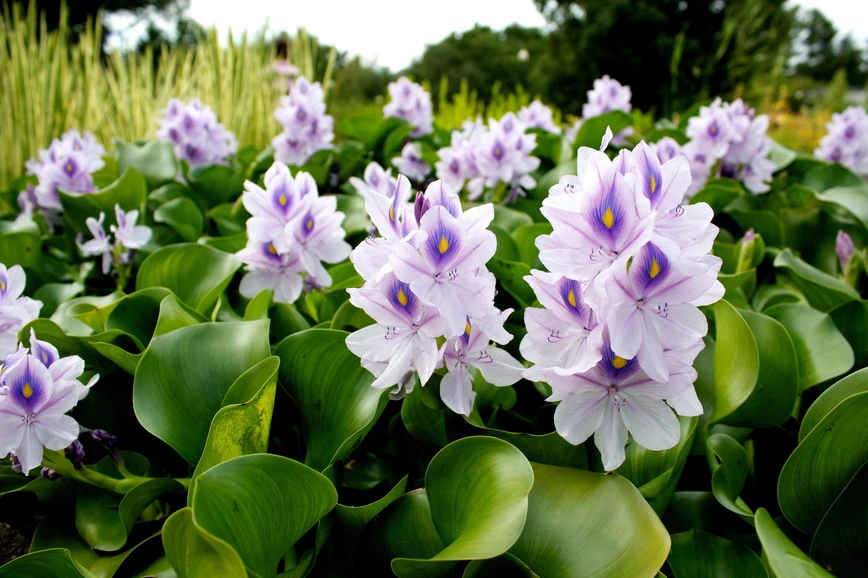
Water hyacinth is one of the world’s most notorious aquatic weeds. With its floating leaves and lilac flowers, it can look attractive at first, but it spreads rapidly and forms thick mats that block sunlight, reduce oxygen, and choke waterways.
In South Africa, it is a serious invasive species and a long-running management problem. It can clog irrigation systems, interfere with pumps, and degrade water quality. In heavily infested water bodies, it can also suppress submerged plants and disrupt aquatic ecosystems.
Hartbeespoort Dam is one of the best-known South African examples. It has dealt with repeated water hyacinth outbreaks for decades, showing how difficult this plant is to eliminate once conditions favour growth. Even after successful control, it can return if nutrient pollution and other drivers remain in place. That makes it a strong reminder that clearing the weed alone is not enough if the underlying problem is not addressed.
Water hyacinth can absorb nutrients from polluted water, which is why it is sometimes studied for use in wastewater treatment. That does not mean it is safe to leave in open dams or canals. In unmanaged conditions, the damage it causes usually outweighs any benefit.
Water Lettuce (Pistia stratiotes)
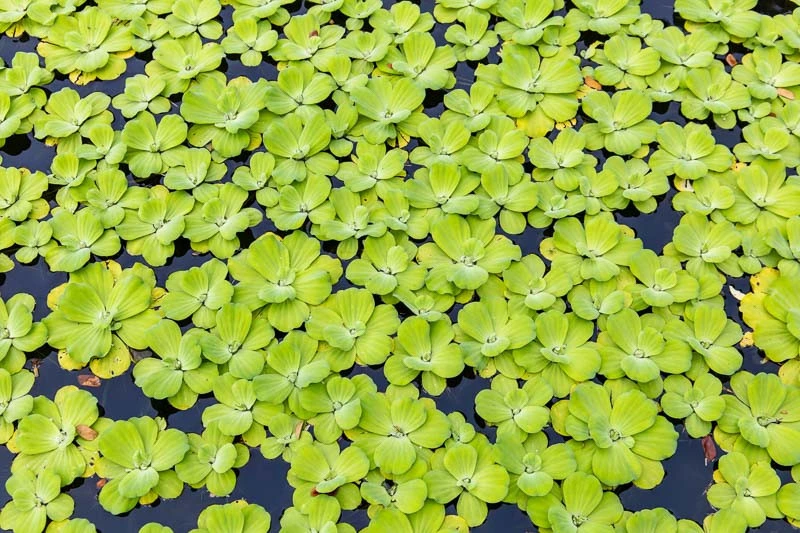
Water lettuce is a floating plant with pale green, velvety leaves that can quickly form dense surface mats. It spreads vegetatively and can multiply rapidly in warm, nutrient-rich water, especially where flow is slow.
Like water hyacinth, it blocks sunlight, lowers oxygen levels, and interferes with irrigation and drainage infrastructure. It can also create sheltered conditions that encourage mosquitoes and other pests. In canals and rivers, dense infestations can reduce flow and increase maintenance demands.
The Vaal River Barrage experienced a major water lettuce outbreak in 2023 and 2024, which drew national attention because of the cost and effort needed to clear it. Local reporting described how the infestation spread quickly, covered large stretches of the barrage, and created real pressure for nearby users and businesses. That is what makes this weed so disruptive. Once it takes hold, the clean-up cost can be significant.
Origin-wise, water lettuce has a debated history, but its invasive behaviour in South African waterways is not in doubt. Once it establishes, it is difficult to ignore and expensive to manage.
Kariba Weed / Giant Salvinia (Salvinia molesta)
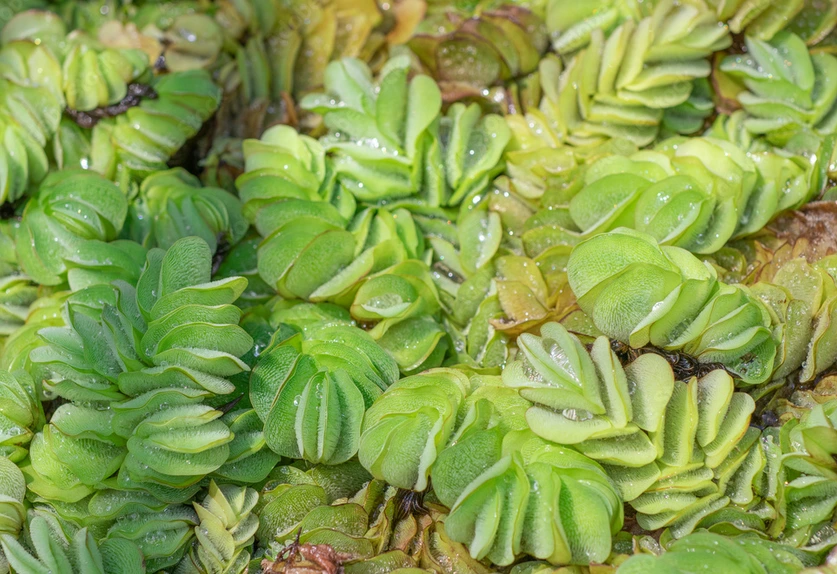
Kariba weed, also known as giant salvinia, is a free-floating fern that can form thick mats over still or slow-moving water. Those mats block light, reduce oxygen exchange, and can severely disrupt aquatic ecosystems and water use.
This species has been one of South Africa’s biggest biological control success stories. The salvinia weevil has helped suppress infestations at many sites, and long-term monitoring has shown major reductions where biological control became established. In many cases, this has greatly reduced the need for repeated chemical or mechanical intervention.
A national monitoring study covering 57 infestation sites showed that long-term biological control brought many heavy infestations down to negligible levels. That makes salvinia a good example of what can happen when a suitable biological control programme is introduced and supported over time. For site managers, the lesson is clear. This plant can be controlled, but it should be dealt with early.
Parrot's Feather (Myriophyllum aquaticum)
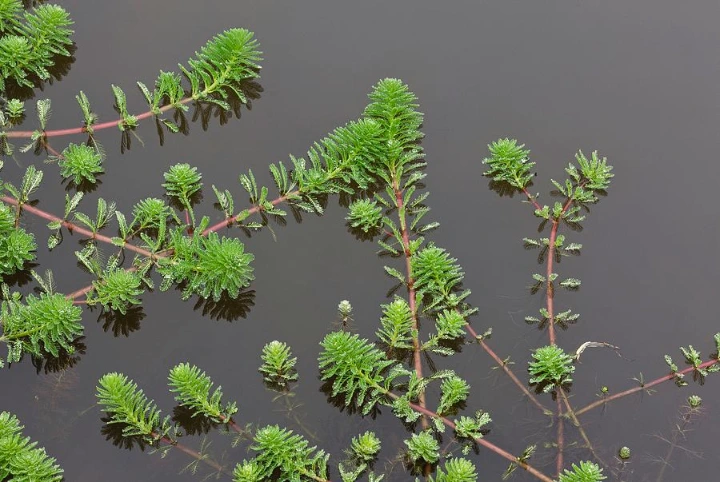
Parrot’s feather is a feathery aquatic plant that grows in dense mats and spreads mainly through fragments. It is a common problem in ponds, canals, slow flowing streams, and drainage systems.
Its impact is familiar. It reduces water flow, blocks infrastructure, shades native plants, and increases maintenance costs. Because it can regrow from small fragments, careless removal can make the problem worse if plant material is not handled properly.
In general, plants spread by seeds. Parrot's feather doesn't. South Africa has only female plants, and without males, they can't produce seeds. Instead, the plant spreads when a piece breaks off and grows into a new plant somewhere else.
This means most infestations started because someone dumped aquarium clippings in a drain, or a stem fragment washed downstream, or a piece hitched a ride on a boat trailer. There are no seeds drifting on the wind. Every outbreak is traceable to a physical piece of plant being moved from one water body to another.
South African control efforts have shown that parrot’s feather can be managed effectively when the right biological control agents are used. That matters for long-term control, but the plant still causes serious problems in drains, canals, and slow-moving water where it is allowed to spread unchecked.
Why These Plants Matter
These species thrive where water is still, nutrient rich, and poorly managed. Once they gain a foothold, they can move from a minor nuisance to a serious operational issue very quickly.
The business costs usually show up in the same ways. Blocked pumps, reduced storage, higher dredging or clearing costs, lost access to water, and greater maintenance demands. In some cases, there are also regulatory obligations to control invasive species on the property.
The key point is simple. Early action is almost always cheaper than recovery after a full infestation. The longer these plants are left alone, the more expensive they become.
How They Are Managed
There is no single control method that works best everywhere. Mechanical removal can give immediate results, especially where the priority is to restore flow or reopen access. Chemical control may be appropriate in some situations, but it must be used carefully and in line with the law. Biological control can be highly effective over time, but it is not instant.
For many sites, the best solution is an integrated approach. Remove what is there, prevent reinfestation, and address the nutrient and runoff conditions that allowed the weeds to spread in the first place.
If you manage a dam, irrigation system, farm pond, mine water body, estate lake, or golf course feature in South Africa, invasive aquatic plants should be treated as an operational risk, not a cosmetic one. The earlier they are addressed, the easier and cheaper they are to control.
Visit www.dartgroup.co.za to learn more about Dart’s mechanical dam cleaning and aquatic weed control services, or contact the team for a site assessment.