
Milly's Restaurant
Location: Machadodorp, Mpumalanga
Service: Reed removal
Equipment: TX08 Amphibious Excavator
Duration: 40 working days · 11 November 2025 – 22 January 2026
Area cleared: 16,000 m²
Millys Case Study.pdf
The dam next to Milly's Restaurant on the N4 outside Machadodorp had been taken over by reeds. What had been open water was gone, buried under a dense mat of Phragmites australis that had spread across more than 16,000 square metres of dam surface. The property had an island that was no longer reachable
This is a common situation across South Africa. Phragmites is one of the most aggressive invasive plants in freshwater systems. Left unchecked, it expands season by season, the root mat thickens, open water disappears, and the cost of recovery grows every year.
Why conventional equipment couldn't do this job
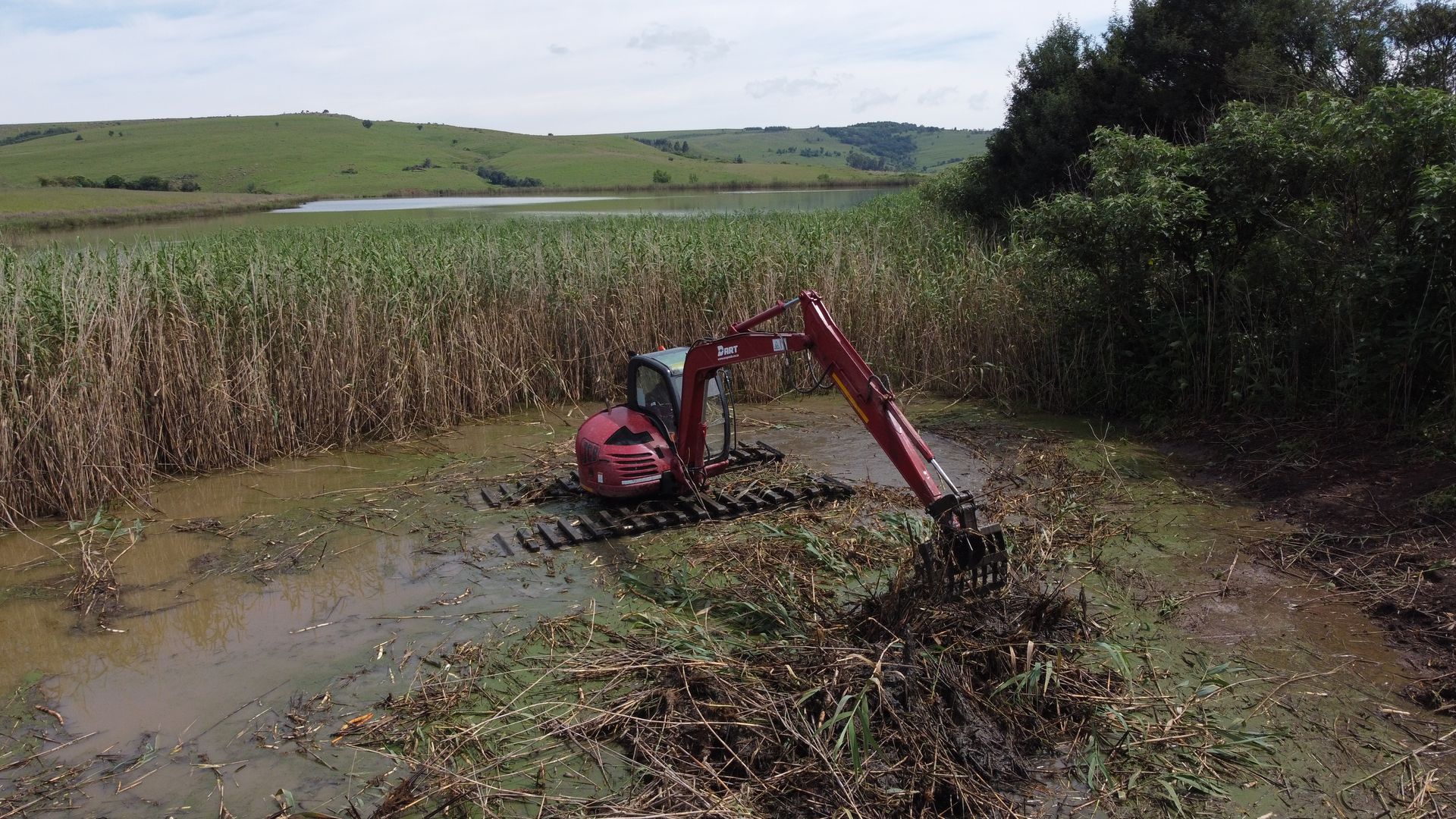
Reed removal from an established dam is not a job for a standard excavator. Waterlogged reed beds do not support machine weight. A conventional excavator would sink before it got close to the problem. This is the point at which most contractors walk away, or recommend draining the dam first, which adds cost, time, and its own set of complications.
The equipment: TX08 Amphibious Excavator
The TX08 Amphibious Excavator operates on wide pontoon tracks that distribute its weight across soft, waterlogged ground - and can function directly in open water up to 1 meter deep. There is no need for temporary access roads, no draining, no site preparation. The machine drove straight into the reed beds at Milly's from day one.
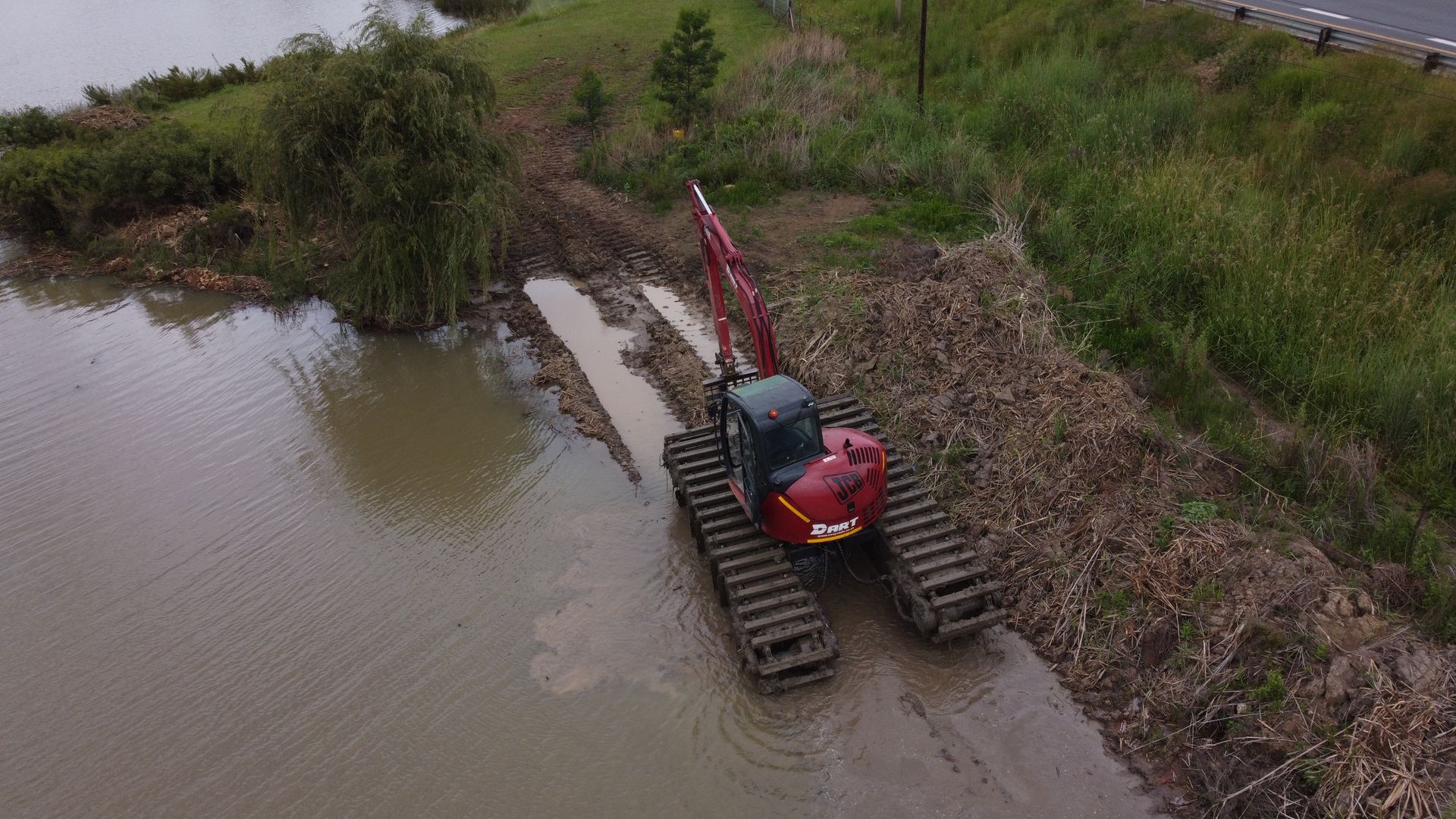
This is what makes amphibious excavation practical for dam reed removal in South Africa. The ground conditions that stop other equipment are not a constraint.
The challenge that made this site unusual
Most reed removal projects involve clearing vegetation and hauling the material off-site. At Milly's, there was an additional complication: the reed beds had cut off a section of the property entirely. An island had formed, or rather, the property beyond the reeds had become unreachable.
Clearing the reeds would open the water. But the removed material, tonnes of cut Phragmites still needed to go somewhere. Trucking it off-site would have added significant transport cost to the job.
The solution: reeds become the road
Rather than removing the cleared material from site, Dart used it to build an access path across the dam bed. The cut reeds, densely packed, provided enough structure to create a stable crossing over the cleared dam floor.
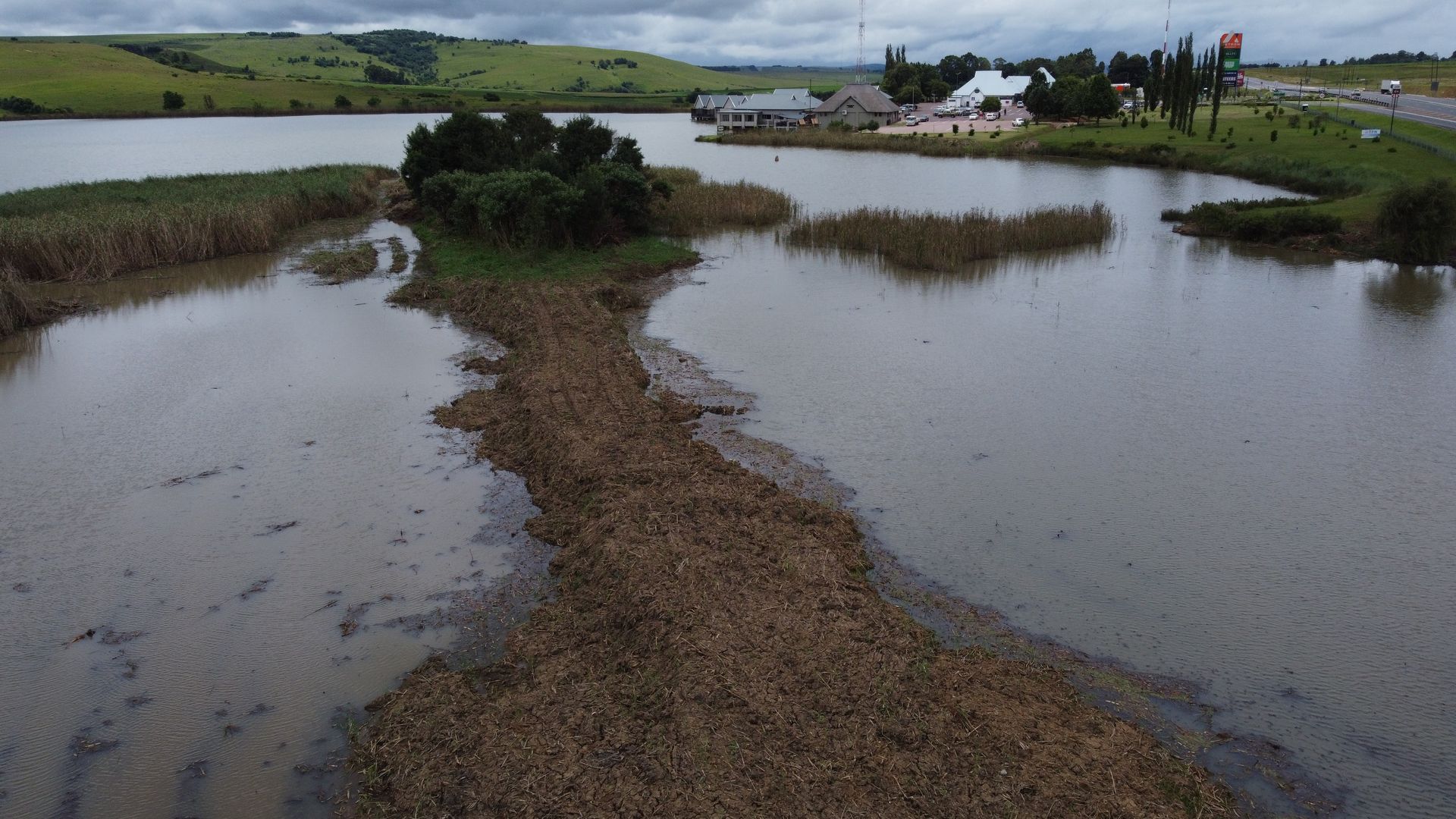
This resolved the waste disposal question and delivered an additional benefit the client had not originally anticipated: permanent pedestrian access to the previously unreachable section of the property. The island was no longer an island.
The result
After 40 working days, 16,000 m² of Phragmites coverage had been removed. The dam was open water again. The site is visible from the N4 highway, the before and after is clear from the road.
The access path across the dam bed remains, giving the client use of a part of their property they had lost to reeds.
How to remove reeds from a dam
Phragmites australis is a Category 1b invasive species in South Africa under the National Environmental Management: Biodiversity Act (NEMBA). It is listed as requiring control, its spread must be managed, and untreated infestations can result in compliance obligations for landowners.
Beyond compliance, the practical damage is significant. Phragmites:
- Reduces dam storage capacity as root mats accumulate sediment
- Eliminates open water surface, reducing the dam's value for irrigation, livestock, and recreation
- Provides habitat for mosquitoes and can increase algae growth in stagnant pockets
- Spreads by rhizome and seed, once established, natural retreat is unlikely without intervention
The most cost-effective approach is early intervention. A dam with reeds along the margins is a manageable project.
Dart operates across Gauteng and Mpumalanga
If your dam has reeds spreading from the margins, or sections of open water already lost to vegetation, a site assessment is the right first step. Dart works on farm dams, estate dams, golf course water features, and industrial water bodies, anywhere the access constraints of the site require specialist equipment.
Contact DART for a site assessment · dartgroup.co.za
Related: Reed removal services · Aquatic weed control · Who we work with